Self-Sufficiency
Heating With Wood: The Charm, the Chores, and the Occasional Pain in the Ass
Plan firewood, kindling, storage and stove safety with a practical wood-heat routine from our Southern Appalachian homestead.
There is nothing quite like coming inside from the cold and walking up to a wood stove. That heat gets into you. Add a cup of coffee, my spouse, and an evening with the lights off and the stove glowing, and I am pretty content with my life choices.
Those same life choices require me to haul wood, split wood, stack wood, and clean up an unreasonable amount of tree debris. I can love the whole arrangement and still be thoroughly over a particular armload.
We heat primarily with wood here in the Southern Appalachian mountains of North Carolina. The stove gives me something I value enormously: security. When the power goes out, we still have a way to keep warm. I can put a cast iron Dutch oven on the stove and make dinner, too.
That is worth a lot to me. It just comes with bark on the floor.
Firewood: Buy It When You Can, Not When You’re Freezing
Most of ours is delivered by a good local guy from a tree farm. This is not an elaborate consultation about the exact blend of hardwoods I would prefer. You get what you get. He didn't even ask how big the stove was, although knowing the lengths your stove takes certainly makes life easier.
I order whenever I have the opportunity so it has plenty of time to dry. Our humidity can be ridiculous, and drying sometimes takes longer than you'd like. I mostly judge readiness by how long the wood has been drying; I've never used a moisture meter. Last year's leftovers are what I start burning first.
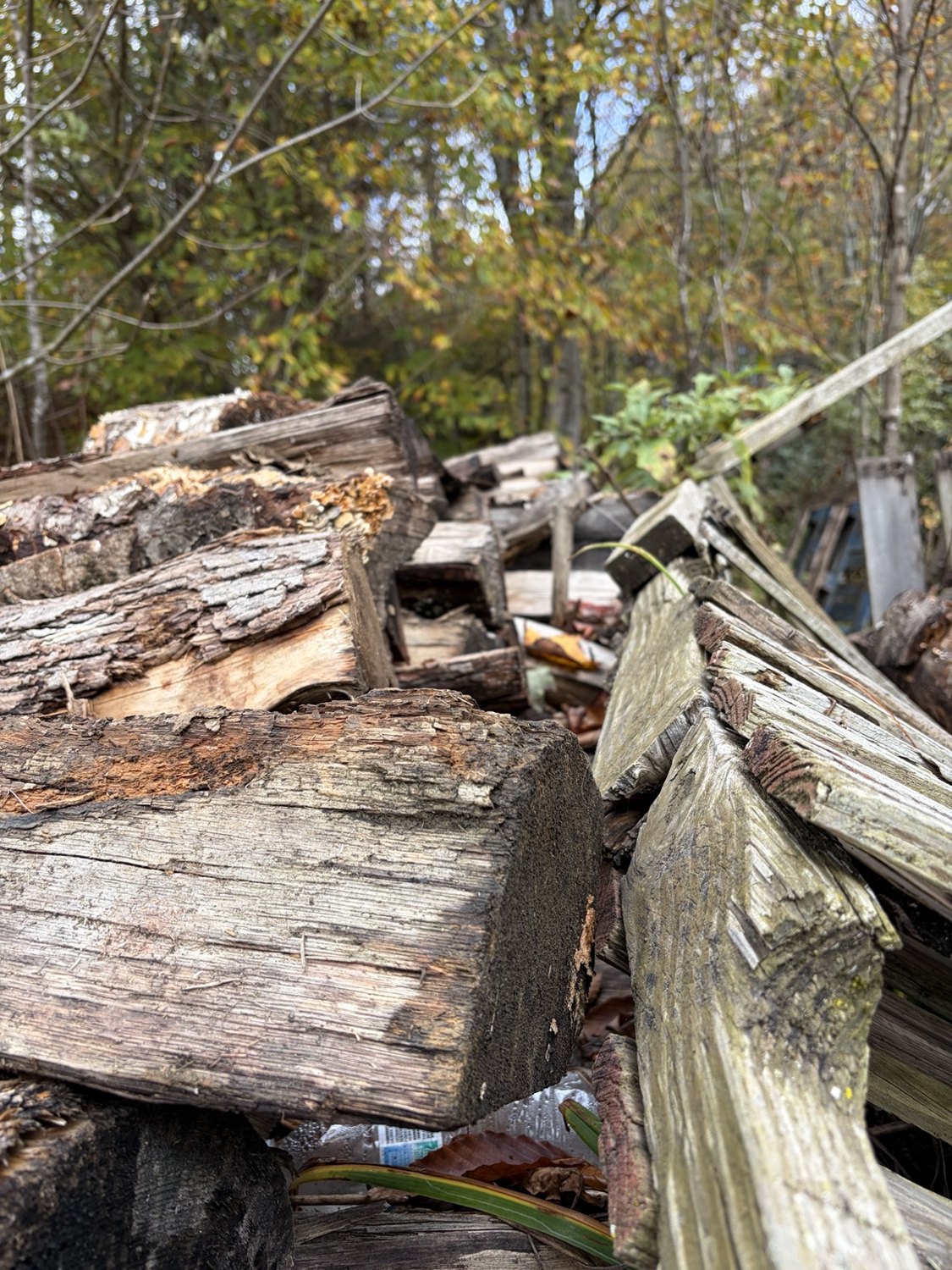
In spring, I also start looking for fallen trees on our property and making note of what we can cut up and bring down to the woodpile. We split what needs splitting and stack it to dry. It's satisfying to put something from our own place to use, even when the process involves dragging and muttering.
The main drying pile stays away from the house. Bugs are gross, snakes may be tucked into sheltered spaces, and I have already experienced Norway rats finding a super-secret entrance into the house. I do not wish to provide complimentary landscaping around their next construction project.
Kindling disappears like it has somewhere else to be
Collect branches. Kindling goes so fast. You can have a pile that looks perfectly respectable and then discover that several fires have apparently eaten the entire thing.
I gather branches and cut short pieces into little fatwood-sized sticks, setting them in milk crates or something similar to dry. They're small split kindling, not necessarily the resin-rich wood sold as fatwood. Branch piles also attract mice and snakes, so I keep that in mind when moving or sorting them instead of reaching blindly into hiding places.
Before cold weather arrives, I stock the covered back porch with split wood and kindling. Additional wood stays stacked outdoors under cover. Covering the top while leaving air circulating around the sides helps drying; wrapping a damp pile up tightly doesn't do it any favors.
Inside, I keep kindling in a bin or bucket. There's also a simple kindling box on the porch. I like having small pieces for starting, medium pieces for building heat, and larger ones for longer burns. Otherwise, “start a fire” becomes “go split something,” and that was not the damn assignment.
Why I like my Fiskars axe and hatchet
I'm five-foot-five, and most of my muscle appears to have settled in my ass and legs. Somehow I can haul 50-pound feed bags and bales of hay, but getting them off the ground requires effort. My arms are not interested in swinging the heaviest axe available simply to prove a point.
The reason I like my Fiskars axe and hatchet is their light weight. They're manageable for me, and I can swing them repeatedly without my arms quitting after three attempts.
I have chopped wood for a few continuous hours with that axe. Should I? Probably not. Does my back appreciate it? Absolutely not. I still need breaks, stable footing, and enough sense to stop before fatigue starts making decisions for me.
Affiliate disclosure: I may earn a commission from qualifying purchases through the product link in this section, at no extra cost to you. As an Amazon Associate I earn from qualifying purchases.
My wood hauler cost about seven dollars
You do not need a fancy wood carrier. I use a Walmart tote that cost me about $7 and a tarp-pulling belt with clips. I attach the clips where I can at the ends of the tote and drag it. The bin slides over snow, which is considerably more cooperative than carrying every piece myself.
I had two broken ribs last year, with complete fractures and separated cartilage. Hauling wood in my arms wasn't happening. Dragging was easier for me at the time.
The strap I use is THE A.N.T. Tarp Tool. It's part of my actual setup, not something everyone needs to buy. A cheap children's sled could be another option. If your significant other has a deer sled, you could also borrow it for wood hauling and discuss the expanded household applications later.
No snow? A wheelbarrow or garden cart can get a manageable working supply closer to the door. I try to set up that grab-and-go pile early, so getting wood doesn't mean a trip to the main stack every time. It still needs to stay outside stove clearances, away from ignition sources, and clear of exits.
I usually bring in enough for the night and the next morning's fire. Morning me deserves a little assistance. She has not yet had coffee.
Starting the fire depends on the day
Sometimes I build top down. Sometimes I start with a little pile and work toward larger pieces. It depends on my mood and what I'm working with.
We also make little fire starters with cupcake liners, wood or pine shavings, and wax; sometimes there are bits of jute or tiny dried pinecones. They're a thrifty project and can make gifts. Homemade wax starters aren't automatically approved for every stove, though, so check the manual before using them. Only clean, untreated wood material belongs in that conversation—not sawdust from painted, glued, or treated projects.
When reloading on hot coals, I still start small rather than immediately putting on an enormous piece. A log that won't catch and a smoky, reluctant fire are a miserable combination when you're cold. Persistent smoke or poor draft needs attention, not more fuel piled on top.
We had a Vermont Castings stove when we first moved in and now use the least expensive Tractor Supply stove we could get. The current one heats reasonably well; the Vermont Castings held a fire longer. Our current installation needed a damper. That's our experience, not a guide to modifying someone else's stove or flue.
Ash: the part no one makes look romantic
Ash gets everywhere. Bark gets everywhere. You are going to get dirty. I don't know how my uncle made wood heat look so clean and effortless, but I have questions.
I scoop ash into a lidded metal can. If there are embers, the can goes outside onto the driveway or another nonflammable area. Ashes can conceal embers after they look dead: keep the covered metal container outdoors, at least 10 feet from buildings and away from combustibles, until everything is fully cooled and extinguished.
I have reused cold ash around the property, including some on gravel for traction and some in compost. That isn't a reason to empty every ash can onto the garden: ash changes soil chemistry, and too much can cause problems. An ash vacuum is on my wish list, not something I've tested. It would need to be designed for ash and used within its temperature limits.
I'd rather have wood left than a delivery in the driveway during a snowstorm
Last year we bought three dump-truck loads at about $325 each—roughly $975 total. I estimate we burned one to two loads and had a decent amount left to start this year. Those are our supplier's truckloads, not a known number of cords.
I tend to over-order when I can afford it because I don't want to stack in the snow. We have had a winter delivery dumped in the driveway. I covered it with a tarp, then geared up and stacked for a while whenever it wasn't snowing, moving wood closer to the porch.
You can do it. You can also stand there thinking about how much nicer this job would have been several months earlier.
A few things worth getting right
Have the stove and chimney professionally inspected and cleaned each year, with additional cleaning as needed. Keep smoke and carbon monoxide alarms working, and follow your stove’s manual for fuels, clearances, dampers and stovetop use. Don’t deliberately smolder a fire for a longer burn. If an alarm sounds or you suspect a chimney fire, get outside and call emergency services.
Sources: U.S. Fire Administration: heating safety, safe ash disposal, and EPA’s archived wood-burning guidance.
And then there is the part I wouldn't trade
I've made grilled cheese on our stoves, full vegetable dinners, and chicken stew, using cast iron skillets and a Dutch oven. We don't eat a lot of meat, and the stove has cooked more than one kind of dinner. We also keep water or a simmer pot on top; I enjoy the scent as much as the cozy atmosphere. Anything on the stove needs a stable, suitable surface and attention so it doesn't boil dry.
The hauling and the mess are real. So is walking in from the cold and feeling that warmth. So is knowing a power outage doesn't automatically take our heat with it. So is sitting with my spouse and my coffee, with nowhere I'd rather be.
I chose this life. I love producing more of what we need and becoming more self-sufficient. I wouldn't trade it for a spotless floor.
I would accept the spotless floor as an additional benefit, though.