Farm Life
Winter Animal Chores: Frozen Water, Straw, and Other Seasonal Bullshit
Frozen water, dry bedding, feed-bag windbreaks and the bedtime round: practical winter animal care from our Southern Appalachian homestead.
All winter water is a pain in the ass. Some containers simply show more dedication to the role.
Rabbit water bottles are particularly committed. They freeze, the plastic can crack, and suddenly an ordinary chore has acquired several additional steps. Quail bottles participate in the same nonsense. Everyone still needs water, so standing there being annoyed about it only gets you so far.
We have poultry, quail, rabbits, pigs, guardian dogs, and outdoor barn cats here at Nevermore Farms. I love this life and the animals in it. I don't need every winter chore to become an endurance event to demonstrate that affection.
Most of my preparation is about making their spaces work and the rounds less difficult: water I can swap, bedding I can replenish, somewhere out of the weather, and fewer unnecessary trips. Sometimes the answer involves a heated bucket. Sometimes it involves a feed bag and zip ties. There is room for both in the budget.
Affiliate disclosure: Some product links below are affiliate links. We may earn a commission from qualifying purchases at no extra cost to you. As an Amazon Associate I earn from qualifying purchases.
Frozen bottles, spare bottles, and the never-ending water shuffle
For rabbits and quail, I keep an extra set of bottles indoors, ready to replace frozen ones. I usually fill my own bottles about halfway to leave room for expansion because I've had plastic bottles crack. That's how I handle my bottles; it isn't a filling instruction for every model.
If you're building up a spare set, the Lixit 32 oz rabbit bottle and Lixit four-pack are options. These have different filling instructions from my halfway routine: Lixit says to fill them completely for the vacuum seal. Follow the directions for the bottle you buy and check that water flows. A bottle full of water is not much help if the drinking tip has become an ice cube.
I've reused soda bottles for this purpose, too, and keeping spare compatible drinking tips is worth it to me. Having the replacement part there is nicer than discovering that a small piece of plastic has become the day's main project. I get my tips separately at the local feed store, so check yours first—they may have just the part you need for less.
For compatible reused bottles, the Lixit Water Bottle Kit with Spring is an online option. It includes the drinking tube, cap, gasket, and mounting spring, rather than a bottle. Check the fit: it's for a common 28 mm bottle neck and doesn't fit 2-liter soda bottles. Jeffers also carries the kit; compare the total with shipping before deciding where to buy.
I refill or swap water multiple times a day, depending on conditions, to keep everyone drinking. If I can position a container behind a windbreak while keeping it accessible, I do. It helps with exposure; it doesn't retire me from water duty.
Little rubber crocks are another option I use. Pop the ice out, refill, repeat. If you need something similar, Little Giant two-quart rubber pans are one option; choose the size and depth for the animals using them. With a doe and litter, I pay particular attention to keeping babies from getting into water or getting wet. The container has to suit the animals using the space.
I don't have the funds or electrical capacity to run heated bottles everywhere. Extra bottles and a rotation aren't glamorous, but neither is carrying a frozen one back inside while another animal is waiting for a drink.
Heated buckets: one less damn thing to thaw
I use heated five-gallon buckets for the guardian dogs when we have electricity, and they're worth every penny in winter. Having that much unfrozen water available is wonderful, and the chickens use them too. If you're looking for something similar, this API five-gallon heated bucket is one option. Small chicks and young quail need their own suitable waterers, away from deep open buckets or pans.
When power is out, I switch to rubber pans and manual refills, with checks often enough that the animals still have liquid water. A heater is convenient; a routine that works without it is necessary here.
Our free-ranging chickens normally drink from the creek. When it isn't accessible, I use a waterer on a heated base while electricity is available. If you're setting up something similar, this 125-watt poultry waterer heating base is one option. Match the waterer's material and capacity to the heater's instructions. During an outage, it's back to providing water manually. I still need a clean, accessible water supply when the creek can't provide one.
Pigs are another excellent reason to appreciate rubber pans. Their water is a pain in the ass, and I would like to spend slightly less of my life negotiating with it. This year, I routed a spring through a corner of their pen to make watering easier. I still check that they can reach suitable water when conditions change.
The shelter budget sometimes arrives wrapped around feed
Wind protection makes a big difference for us. For caged animals such as rabbits and quail, feed bags and zip ties can make useful partial windbreaks. Clear shower curtains can also help cover exposed sections of a hutch or run.
I don't seal up the whole enclosure. They need air exchange as well as protection from direct wind. Covers need to stay secure and out of chewing reach, without loose pieces or ties creating a hazard. The point is to improve the space, not turn a cage into a damp plastic parcel.
Before winter, I look at whether shelters can handle snow. In a pinch I've used an arched cattle panel with a tarp and plenty of straw. Temporary shelters still need checking for sagging, damage, and snow buildup; they aren't a substitute for a sound shelter when conditions get worse.
Our pigs are small enough this year to fit the repurposed IBC tote shelters. Give them a covered, protected place and a generous supply of dry straw, and they burrow into it. Apparently, burying yourself in a ridiculous amount of straw is an acceptable response to winter if you're a pig. I have to admit, I see the appeal.
Fresh bedding. Again. Because apparently they live here.
I use straw for most of the animals' shelters. Rabbits are the exception: I use hay in their cages, and an enclosed hutch section is helpful. They eat hay as well, so keeping it clean matters. Straw isn't a substitute for the hay in their diet.
We breed rabbits during the colder months, which means watching the does and litters rather than assuming adult cold tolerance settles the matter. I change out hay when it gets gross. With any bedding material, wet and fouled is wet and fouled; adding another handful doesn't fix what's underneath.
Quail get straw in their cages, changed regularly. Sometimes I make little shelters inside their housing; they also work resting spots into fluffed-up straw. They still need the main enclosure to keep them protected and dry. Young quail have different heat needs from fully feathered adults.
For chickens, I focus on a dry place out of direct drafts, ventilation, and straw on the floor. Ducks and turkeys also need dry resting space and unfrozen water suited to them. With ducks, managing splashes matters because bedding and a water party do not remain separate for long. Waterfowl need a way to dunk and clean their heads without soaking the resting area.
I keep extra bales of straw and tarps because repairs don't wait for a convenient shopping day. I have no desire to discover I need bedding in the middle of bad weather and turn it into a road trip. There is a warm wood stove in my house. I would eventually like to see it again.
Yes, the dogs have shelters. Yes, they may choose the snow.
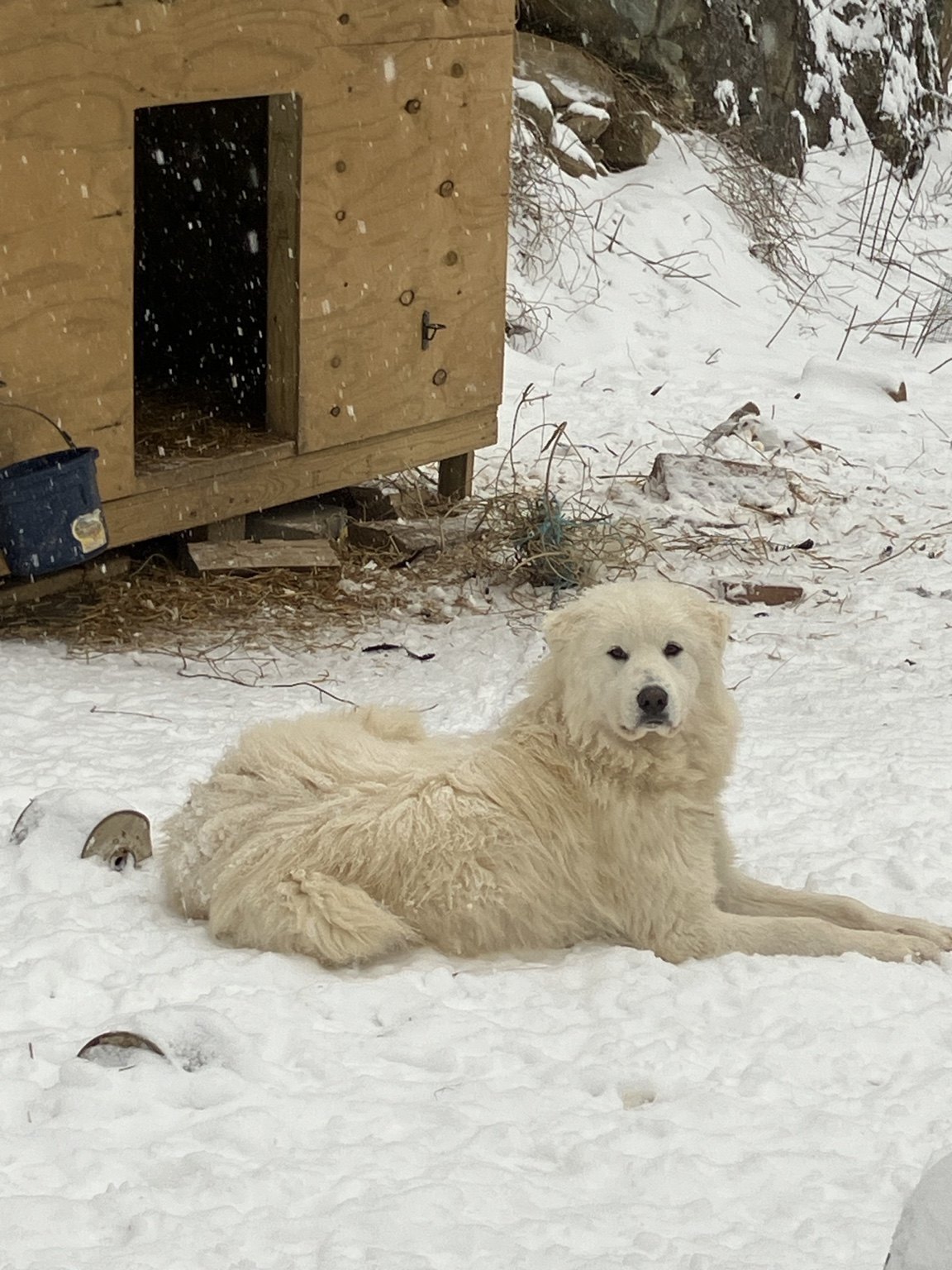
Our guardian dogs have access to barns, dog houses, and IBC tote shelters. Their shelters get plenty of straw, they have places out of the wind, and I check bedding often because snow carried in on coats can melt and leave it wet.
Sometimes a Great Pyrenees chooses to lie in the snow anyway. That sight alone doesn't tell you the dog has no shelter. It may tell you the dog has considered the available accommodation and made a decision you wouldn't make in your pajamas.
I still check the dog, the weather, and the shelter. A heavy coat isn't a guarantee against cold injury; age, health, wetness, wind, and body condition matter. Choosing a snow nap and being unable to get warm are different situations. Signs of illness or cold distress mean getting the animal protected and seeking veterinary advice.
The barn cats have their own accommodations. I've used self-heating mats and brooder panels in cat houses before; some cats also curl up with guardian dogs. This year's plan is their own repurposed IBC shelter, with straw, self-heating mats, and a brooder panel. That plan depends on having a panel approved for the setting, with its required clearance from straw and plastic.
I'm not trying to heat the whole barnyard
I don't routinely heat every shelter. I've used radiant panels in the chicken coop before, but I don't run heat lamps in winter. For our setup, getting animals dry and out of direct wind, with suitable bedding, does a great deal of the work.
Bedding helps retain body heat; it doesn't guarantee enough warmth for every animal. Young, sick, thin, or otherwise vulnerable animals may need supplemental heat or a more protected space. That gets decided for the animals and conditions in front of us.
Any electrical equipment around animals, water, or bedding needs to be rated for that use, installed to its instructions, and protected from damage. I appreciate heated buckets for the work they save, not because they let me stop checking everyone.
Bedtime feeding: the barnyard gets room service
In winter I tend to split feedings into smaller rounds and make the bedtime feeding bigger. I want the animals going into a cold night with their feeding attended to, rather than trying to squeeze every chore into one rushed visit.
Poultry still need access to suitable complete feed during the day, and rabbits need good hay available all the time. I work the rounds around each species' needs; the bigger bedtime feeding is part of the schedule, not the whole day's food.
Measuring out feed for the next day can save time, as can combining feeding rounds where that works. The purpose is to make the routine easier to keep up with, not to spend the entire winter commuting between the house and a feed bin.
Fewer trips, less slipping, and a little less swearing
Every winter I try different things. This year I'm working toward having more animals closer to the house. Last year I tried a slow drip at the hose bib; this year I want to try a Freeze Miser outdoor faucet protector. I haven't tried it yet, so we'll see how that goes. It still needs a pressurized water supply and discharge that won't ice up the chore path; the manufacturer's installation directions cover the setup.
Doubling up on feeders or bottles has helped me make fewer trips. It cuts down on running back for something I could have brought the first time. When I'm standing outside thinking about the wood stove while the animals await their next refill, it's hard not to feel like their terribly inefficient room-service department. I chose this life. Apparently, that included the winter shift.
And ice grips on my muck boots make a world of difference. I don't use a particular brand, and I avoid enormous spikes because I'm working around paws and feet. I want better footing, not a new problem on the chore route. If you're looking for a similar style, Yaktrax Walk coil-style grips are one option I haven't tried. Check the size against the boots you'll actually wear.
Winter Chore Supplies & Handy Alternatives
Spare bottles, rubber pans, heated buckets, a poultry waterer base, and boot grips are all part of my routine. Here are the options linked above if you're putting together your own setup.
- Lixit 32 oz bottles or the four-pack for a spare-bottle rotation; follow their filling instructions.
- Lixit Water Bottle Kit with Spring: an option for compatible reused bottles. I buy my drinking tips separately at the local feed store; check there before buying a whole kit.
- Little Giant two-quart rubber pans: a small flexible-pan option; choose an appropriate size for your animals.
- API five-gallon heated bucket: one option if you're looking for a bucket like the ones I use.
- Poultry waterer heating base: compare with your waterer's material, capacity, and installation requirements.
- Yaktrax Walk coil-style boot grips: an option I haven't tried; check the fit for your boots.
- Freeze Miser outdoor faucet protector: on my trial list; I haven't used it yet.
This is the kind of winter preparation I value: changes that make daily care easier to keep doing well, even when I'm cold and thoroughly over it. I chose the animals. I love caring for them. I am still allowed to have opinions about frozen water.
If a feed bag, some zip ties, and a spare bottle make the day run better, that's a perfectly respectable homestead improvement.
Sources and related reading
For the care notes alongside my own routines: Maryland Extension’s winter flock guidance, RSPCA rabbit feeding guidance, Utah State’s pig temperature guidance, Cooperative Extension on Japanese quail, and UConn’s cold-weather guidance for dogs and cats.
For the household side of winter, read Heating With Wood.
Our Farm Favorites page has more equipment links, if you're looking beyond the supplies mentioned here.
Bottle instructions: Lixit’s 32 oz rabbit bottle with deluxe holder.